
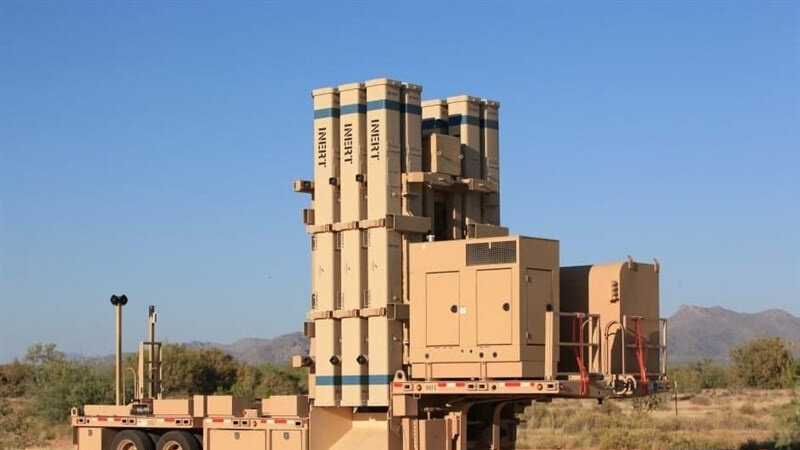
ABNA24 - The Israeli regime has upgraded its David's Sling missile defense system in an effort to reduce the cost of intercepting Iranian missiles.
Bloomberg reported on Friday, November 20, that Israel has expanded the capabilities of its lower-cost David's Sling system so it can intercept a wider range of ballistic missiles and drones, reducing reliance on expensive interceptor missiles.
The news agency, citing a senior official responsible for air defense in the Israeli regime's air force, reported that the upgrades have expanded the system's operational range and enhanced the regime's ability to counter sustained attacks over several weeks.
Following its military confrontations with Iran, the Israeli regime concluded that a missile defense system reliant on expensive interceptors was not economically or logistically sustainable against continuous, large-scale missile attacks.
It has therefore focused on upgrading the medium-range David's Sling system and increasing its role in intercepting Iranian missiles. The move appears to be an attempt to cut the cost of interception and preserve stocks of strategic interceptors. However, the reality is that this so-called solution amounts more to cost management than to addressing the fundamental vulnerability posed by the penetration of Iranian missiles.
The scale of this effort can be examined on three levels. The first is cost. According to reports, each Stunner interceptor missile used by David's Sling costs around $1 million, while an Arrow 3 interceptor costs approximately $3 million and a Patriot PAC-3 missile can cost more than $4 million. This substantial difference means the Israeli regime is seeking to reduce the cost of each interception by using less expensive interceptors against some threats, while preserving the stockpiles of higher-tier systems for more complex situations.
The second level is operational. The latest upgrade has expanded David's Sling's capabilities and enhanced its ability to counter a wider range of ballistic missiles and drones. According to officials from the regime, this development improves its capacity to withstand sustained attacks over several weeks.
The third level is strategic. Through this move, the Israeli regime is demonstrating that it has recognized that a prolonged war of missile attrition is not merely a technical battle but also an economic and logistical one. Without cost management and mass production, even the most advanced air defense network cannot be relied upon over the long term.
However, the objectives of this upgrade go beyond simply saving money. By increasing production capacity and expanding David's Sling's role, the Israeli regime is seeking to reduce its dependence on American interceptors and higher-tier systems, while gaining greater tactical flexibility to select the appropriate level of interception.
This goal is being pursued at a time when Western intelligence estimates indicate that Iran still possesses at least around 1,700 ballistic missiles, with its production capacity estimated at approximately 50 missiles per month.
The Israeli regime's apparent rationale, therefore, is that if the threat is massive and sustained, the response must also be cheaper, easier to produce and easier to maintain.
However, a critical examination of this effort reveals its limitations. First, reducing the cost of interception does not guarantee success. Previous confrontations showed that David's Sling failed to intercept Iranian missiles on many occasions, and even during the most intense phases of the war, some missiles penetrated multiple layers of defense.
Second, the main issue is not simply the price of each interceptor, but the equation of “the cost of offense versus the cost of defense.” While Iran can put pressure on the Israeli regime's missile defense systems using relatively inexpensive missiles and drones, the regime faces substantial costs even when using interceptors priced at $1 million against large-scale attacks. In a war of attrition, such costs could deplete its stockpiles.
Third, upgrading a medium-range system does not resolve the challenge posed by the penetration capabilities of newer generations of Iranian missiles. Reports and expert assessments, including remarks by Theodore Postol, a former Pentagon adviser, point to newer generations of Iranian ballistic missiles with greater speed, accuracy and larger warheads, making them extremely difficult to intercept. Thus, as Iranian missiles advance in capability, reducing the cost of medium-range interceptors will not provide the Israeli regime with an adequate response to higher-tier defense requirements and more complex missile threats.
Therefore, the Israeli regime's efforts to reduce the cost of countering Iranian missiles should be viewed as both necessary and insufficient. They are necessary because, without such measures, sustaining defenses against continuous attacks would become economically and logistically difficult. They are insufficient because savings on interception costs do not eliminate the regime's main problem: the possibility of Iranian missiles penetrating its defenses when they are saturated, the qualitative advancement of the threat, and the depletion of interceptor stockpiles.
In other words, an upgraded David's Sling may reduce the cost of defense, but it cannot by itself guarantee that Iranian missiles will not penetrate the missile defense network in any future confrontation.
/129




Your Comment